Imagine you and your five roommates share a house fund. One day you start keeping track of every contribution and expense in a shared notebook that everyone can see. Nobody can secretly erase a line or change an amount, because everyone has seen it and remembers. If someone tries to alter the record, the others just look at their own copy and say: "No, that's not right."
That's basically how a blockchain works — except instead of six roommates, you have thousands of computers all over the world, and instead of a notebook, you have a continuously growing chain of digital records.
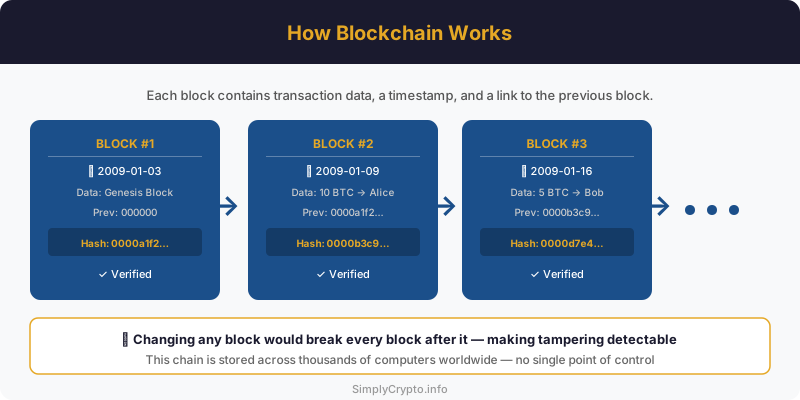
Each "block" is a bundle of recent transactions. Once a block is full, it gets a unique fingerprint called a hash, which includes the fingerprint of the block before it. That link is where the "chain" part comes in. Change anything in an old block and its fingerprint changes — which breaks every block after it. The entire network would immediately see the tampering. The underlying concept is that honesty is enforced by math, not by trust in any single person or institution.