
In October 2008, someone going by the name Satoshi Nakamoto posted a nine-page document to a cryptography mailing list. It described a system for sending digital money directly from one person to another without needing a bank in the middle. A few months later, the Bitcoin network went live. Nobody gave Satoshi permission. Nobody funded it. It just started running.
To this day, nobody knows who Satoshi Nakamoto really is. They could be one person or a group. They disappeared from the internet in 2011, leaving behind roughly one million Bitcoin that have never been moved. That mystery is actually part of what makes Bitcoin unique: there's no CEO, no headquarters, no company to sue or lobby. It's just code running on thousands of computers worldwide.
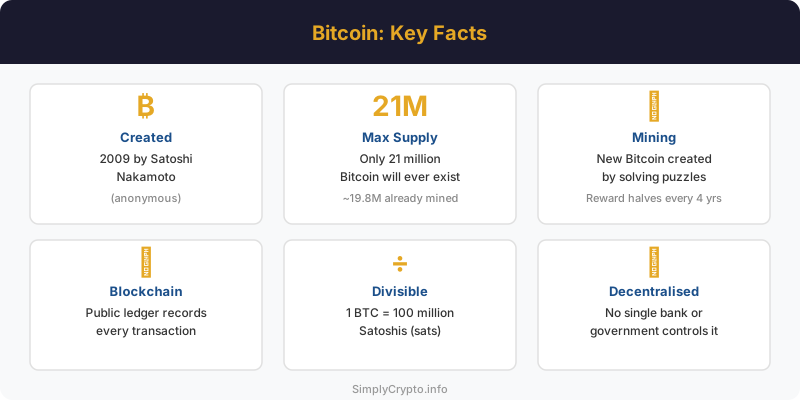
Bitcoin is capped at 21 million coins. That hard limit is written into the code. New Bitcoin are created as a reward to miners — the people who run the computers that process transactions — but that reward halves roughly every four years in an event called the halving. The idea is simple: a predictable, shrinking supply, unlike government money that can be printed in unlimited quantities. Whether that makes Bitcoin a great store of value or a volatile speculation is one of the most debated questions in finance.