
Bitcoin proved that digital money without a central authority could work. Almost immediately, developers started asking: what else could you do with this technology? The answer turned out to be a lot — and also, a surprising amount of nothing useful at all.
An altcoin is simply any cryptocurrency that isn't Bitcoin. The name comes from "alternative coin," and the category includes everything from Ethereum (a programmable blockchain platform worth hundreds of billions of dollars) to obscure memecoins that exist purely for jokes, speculation, or outright fraud.
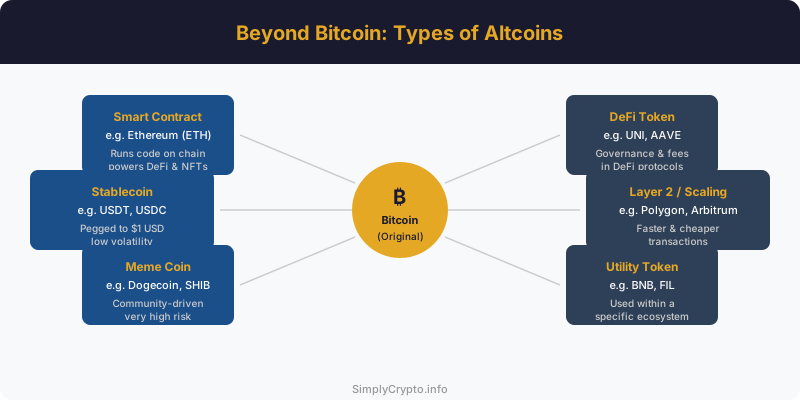
The most important altcoin is Ethereum, which introduced the idea of smart contracts — programs that run on the blockchain and execute automatically when conditions are met. This unlocked an entire universe of applications: decentralised exchanges, lending protocols, digital collectibles, and more. Stablecoins are another genuinely useful category — coins pegged to the dollar or another asset, designed to hold steady value. Then there are thousands of other projects of wildly varying quality. Learning to tell the difference between real utility and marketing dressed up as technology is one of the most valuable skills in crypto.