The term "altcoin" refers to every cryptocurrency other than Bitcoin. It is a broad category that encompasses fundamentally different types of assets: smart contract platforms, stablecoins, utility tokens, governance tokens, privacy coins, and speculative memecoins. Grouping them together is useful only as a starting point; the differences within the category are enormous.
Ethereum is the most significant altcoin and the foundation of the decentralised application ecosystem. Unlike Bitcoin, Ethereum is a programmable blockchain — developers deploy smart contracts, self-executing code that lives on-chain. The Ethereum Virtual Machine (EVM) is a standardised runtime environment that processes these contracts. Most DeFi protocols, NFT platforms, and Layer 2 networks are built on or compatible with Ethereum. ETH, the native currency, is used to pay for computation (gas). The 2022 Merge transitioned Ethereum from Proof of Work to Proof of Stake, significantly reducing energy consumption.
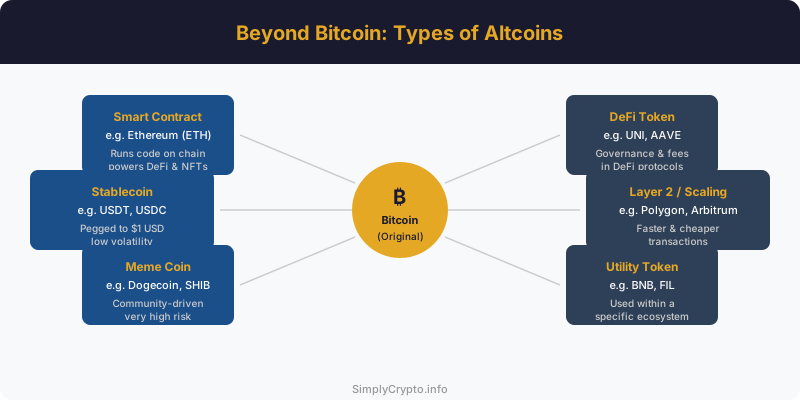
Stablecoins occupy a distinct category. Their value is pegged to a reference asset — usually the US dollar — through various mechanisms. Fiat-backed stablecoins (USDC, USDT) hold dollar reserves. Crypto-backed stablecoins (DAI) use over-collateralised crypto positions. Algorithmic stablecoins attempt to maintain the peg through supply adjustments; the 2022 collapse of TerraUSD demonstrated the catastrophic failure mode of this approach.
Beyond these, the altcoin landscape includes layer-1 competitors to Ethereum (Solana, Avalanche, Cardano), cross-chain infrastructure, oracle networks, and a long tail of projects with minimal real utility. Evaluating altcoins requires examining: the problem the project solves, whether the solution requires a blockchain, the team's track record, tokenomics (how the token supply is distributed and released), and whether there is genuine user adoption rather than speculative trading volume.