
Bitcoin is the original cryptocurrency, first described in the 2008 Nakamoto whitepaper and launched in January 2009 with the mining of the genesis block. It introduced the first working solution to the double-spend problem without a trusted third party, using a Proof of Work consensus mechanism and a cryptographically secured blockchain.
The Bitcoin protocol enforces a hard supply cap of 21 million BTC. New supply is introduced only through mining rewards — payments made to the nodes that successfully add blocks to the chain. This reward began at 50 BTC per block and halves approximately every 210,000 blocks (roughly four years). The most recent halving occurred in April 2024, reducing the block reward to 3.125 BTC. The final Bitcoin is projected to be mined around the year 2140. After that, miners will be compensated solely through transaction fees.
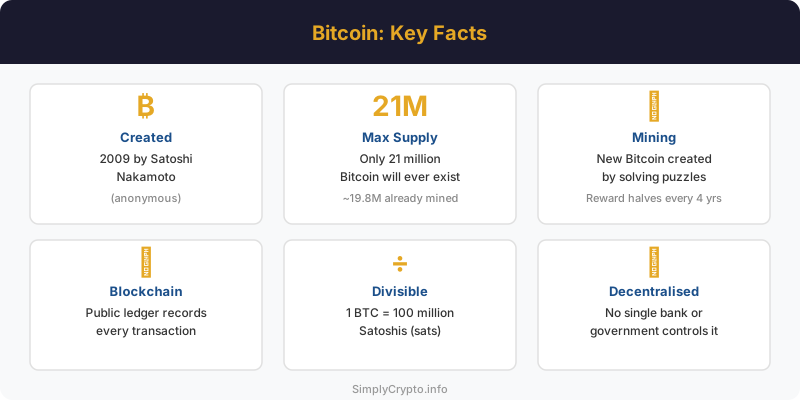
Mining is the process by which nodes compete to add the next block. Miners gather pending transactions from the mempool, assemble them into a candidate block, and repeatedly hash the block header with a varying nonce until the resulting hash meets the network's current difficulty target. Finding a valid hash is probabilistic; the network adjusts difficulty every 2,016 blocks to keep average block time near 10 minutes regardless of how much mining hardware is active.
Bitcoin's position in the market is that of a digital store of value. Institutional adoption has grown substantially since 2020, with publicly traded companies, sovereign wealth funds, and exchange-traded funds holding significant positions. Its fixed supply, censorship resistance, and decade-plus security track record distinguish it from all subsequent cryptocurrencies. Critics point to energy consumption, limited programmability, and price volatility as significant drawbacks. Both observations can be true simultaneously.