Decentralised Finance (DeFi) refers to financial services and products built on public blockchains — primarily Ethereum — that operate through smart contracts rather than centralised intermediaries. The defining characteristic is non-custody: users interact directly from their own wallets, retaining control of their assets throughout.
The DeFi ecosystem encompasses several distinct categories. Decentralised exchanges (DEXs) such as Uniswap and Curve use automated market maker (AMM) algorithms rather than order books. Liquidity providers deposit token pairs into pools; the algorithm adjusts prices based on the ratio of assets in the pool, and traders pay fees that flow to liquidity providers. This eliminates the need for matching buyers with sellers, enabling permissionless, 24/7 trading of any token pair with sufficient liquidity.
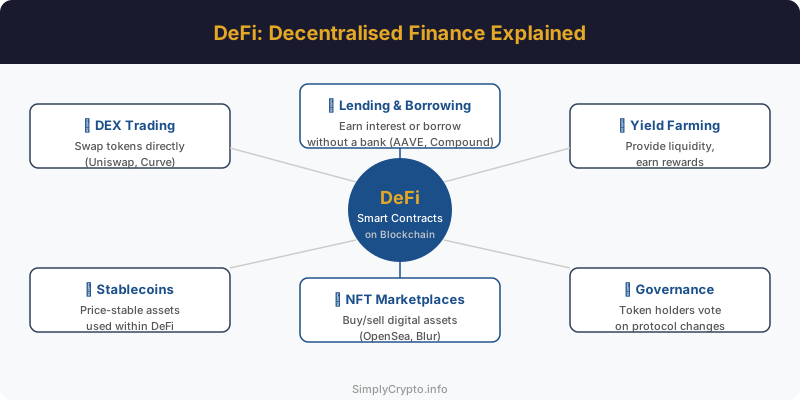
Lending protocols (Aave, Compound) enable collateralised borrowing. Users deposit crypto assets as collateral and can borrow up to a percentage of the collateral's value. Positions are automatically liquidated if collateral value falls below a threshold, eliminating counterparty default risk without requiring credit checks. Depositors earn interest funded by borrowers' payments. Rates adjust algorithmically based on utilisation.
DeFi's risks are substantial and distinct from traditional finance. Smart contract risk: bugs in protocol code have resulted in hundreds of millions of dollars in losses through hacks and exploits. Oracle risk: protocols that rely on price feeds can be manipulated. Liquidation risk: sharp price moves can liquidate collateralised positions rapidly. Regulatory risk: the legal status of DeFi protocols and their governance token holders remains unresolved in most jurisdictions. These risks are not theoretical — significant losses have occurred repeatedly across the ecosystem.