In 2021, a JPEG sold for $69 million. People were spending thousands of dollars on pictures of cartoon apes. To many observers it looked like collective madness. In some ways it was. But underneath the mania was a genuine technical concept: the ability to prove, on a public blockchain, that you own a specific digital item.
An NFT — non-fungible token — is a unique token on a blockchain. Unlike Bitcoin, where every coin is identical and interchangeable, each NFT is one-of-a-kind. It has an ownership record that anyone can verify, and that record can't be faked. That's genuinely useful for some things. Concert tickets that can't be counterfeited. Digital art where the original is distinguishable from copies. In-game items that exist independently of any single game company.
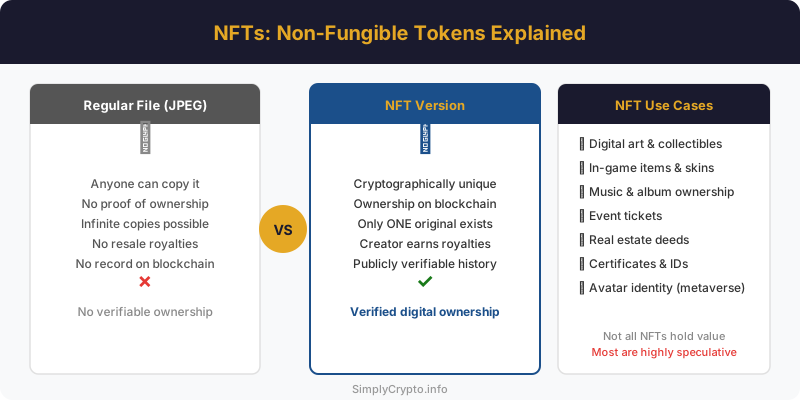
The 2021-22 NFT bubble inflated prices for speculative profile picture collections to levels completely disconnected from any real utility. Most of those projects are now worth a fraction of their peak prices. What remains is the underlying technology and the legitimate use cases it enables. Digital ownership is a real concept. Whether any specific NFT is worth buying is a completely separate question — and for most profile picture collections, the honest answer is probably not.