A token is a digital asset issued on a blockchain. "Token" is often used as a catch-all for any cryptocurrency, but more precisely it refers to assets that exist on an existing blockchain (like Ethereum) rather than having their own native chain. Tokens are created through smart contracts following standards — ERC-20 for fungible tokens, ERC-721 for NFTs on Ethereum.
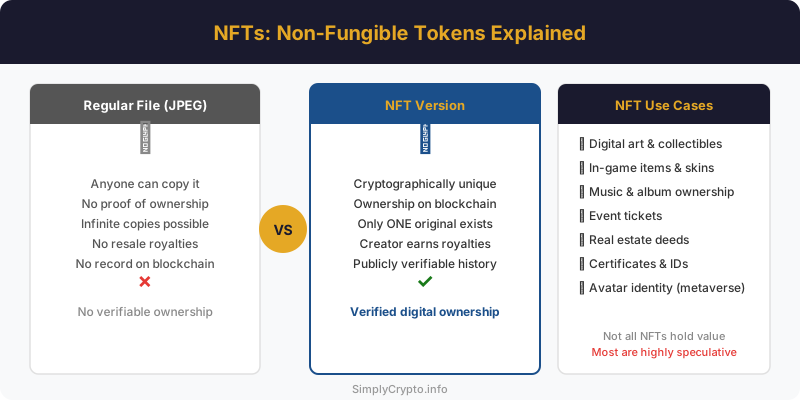
Fungibility means interchangeability: one Bitcoin equals any other Bitcoin. Non-fungibility means each unit is unique and distinguishable. NFTs (Non-Fungible Tokens) are blockchain records that assert unique ownership of a specific asset. Critically, the NFT is the ownership record; in most cases the underlying asset (an image file, video, etc.) is stored off-chain and is not technically inside the token. This is a meaningful limitation: if the server hosting the image goes offline, the NFT remains but its associated content may disappear.
The 2021 NFT market peak saw extraordinary prices for profile picture (PFP) collections — Bored Ape Yacht Club, CryptoPunks, and thousands of imitators. Total market value for NFTs exceeded $40 billion at the peak; it collapsed by over 90% through 2022–2023. The speculation was largely driven by the expectation of resale gains rather than intrinsic utility.
Substantive NFT use cases that do not depend on speculative demand include: event ticketing (NFT tickets are verifiably authentic and can embed royalties for artists on resale), digital art with verifiable provenance, gaming assets that exist independently of any single game's servers, and intellectual property licensing encoded in smart contracts. These applications are in various stages of development and adoption. The technology is real; the challenge is building applications where blockchain-based ownership adds enough value to justify the added complexity.