
Purchasing cryptocurrency begins with selecting an exchange — a regulated platform that facilitates the exchange of fiat currency (dollars, euros, etc.) for cryptocurrency. Exchanges vary significantly in fee structure, supported assets, geographic availability, and user experience. For first-time buyers, the primary considerations are regulatory compliance, security track record, and ease of use.
Account creation requires identity verification under Know Your Customer (KYC) regulations. You will need to provide a government-issued ID, proof of address, and in some cases biometric verification. This is legally mandated for licensed exchanges operating in most jurisdictions and is not optional. Unverified accounts typically have very low or zero purchase limits.
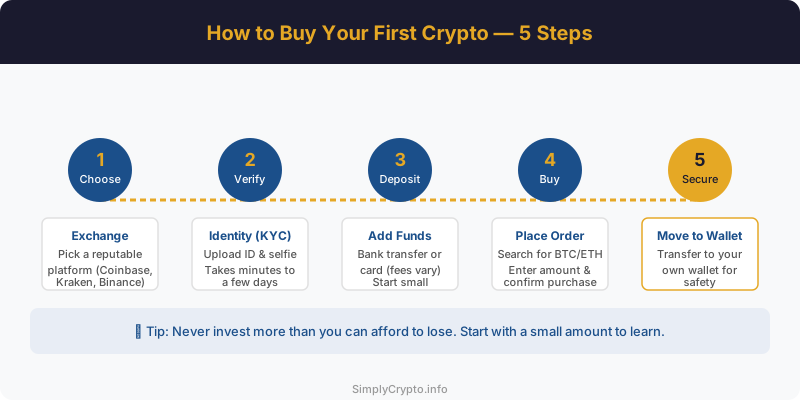
Payment methods and their associated fees differ by platform. Bank transfers (ACH in the US, SEPA in Europe) typically carry the lowest fees — often below 1% — but take one to three business days. Debit and credit card purchases are instant but carry fees of 2–4% or higher. Some exchanges offer instant bank verification for faster settlement. Credit card purchases of cryptocurrency may also be treated as cash advances by your card issuer, incurring additional charges.
After purchasing, consider your custody arrangement. Leaving crypto on an exchange means the exchange controls the private keys — this is acceptable for small amounts and active trading, but introduces counterparty risk. For significant holdings, transferring to a self-custody wallet (software or hardware) gives you direct control. The tradeoff is that you bear full responsibility for securing your seed phrase. There is no password reset in self-custody.