
Cryptocurrency security operates on a fundamentally different model from traditional finance. There is no fraud department to call, no FDIC insurance, no chargebacks. Transactions confirmed on a public blockchain are irreversible by design. This places the entire burden of asset protection on the individual holder.
The most critical security element is the seed phrase. This 12 or 24-word sequence is the root key from which all wallet private keys are derived. Any party who obtains the seed phrase gains unconditional access to all funds in that wallet. It should never be stored digitally in any form — no photos, no cloud documents, no password managers. Physical paper or metal backup, stored in at least two geographically separate secure locations, is the standard recommendation.
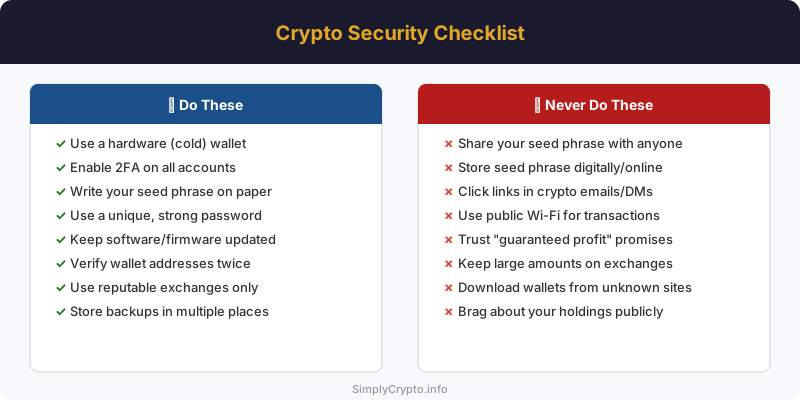
Exchange account security requires strong, unique passwords and mandatory two-factor authentication (2FA). Authenticator apps (Google Authenticator, Authy) are significantly more secure than SMS-based 2FA, which is vulnerable to SIM-swap attacks. Hardware security keys (YubiKey) offer the highest level of account protection for exchange logins.
Social engineering is the primary attack vector for most crypto theft. Common schemes include: phishing sites that mimic legitimate exchanges and wallets; fake customer support representatives in social media and Discord; airdrop scams that request wallet connection to malicious contracts; and romance or investment scams (pig butchering) where fraudsters build rapport before introducing a fraudulent investment platform. Legitimate projects never require your seed phrase, never offer guaranteed returns, and are never offered exclusively through private messages from strangers.