
A cryptocurrency wallet is a tool for managing cryptographic key pairs — specifically the private key that authorises transactions from your addresses. The wallet software does not store coins; rather, it stores private keys and communicates with the blockchain network to broadcast signed transactions and query balances.
Every wallet generates a seed phrase (also called a recovery phrase or mnemonic) — typically 12 or 24 words — from which all private keys in the wallet can be mathematically derived. This seed phrase is the master backup. Anyone who obtains it gains complete control over all associated funds. It should be written on paper (or stamped in metal for fire/water resistance), never typed into any website or app, and stored in a physically secure location.
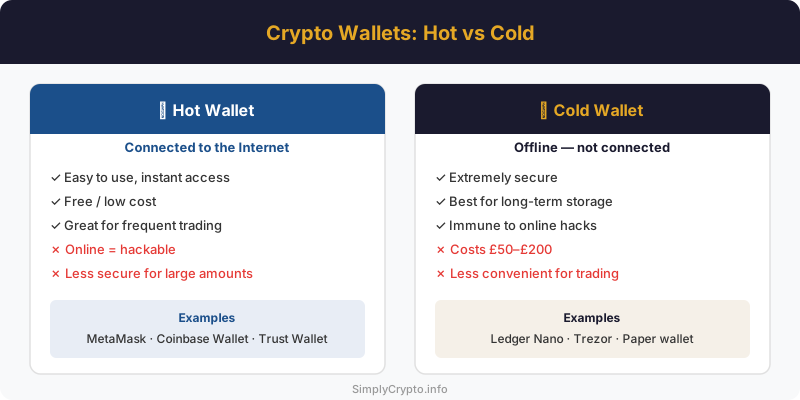
Hot wallets are software applications connected to the internet. They include mobile wallets (MetaMask Mobile, Trust Wallet), desktop wallets (Exodus, Electrum), and browser extensions (MetaMask). They offer convenience and are suitable for funds you intend to use actively, but their internet connectivity makes them vulnerable to malware, phishing, and remote attacks.
Cold wallets (hardware wallets) store private keys on a dedicated physical device that never exposes the key to an internet-connected computer. Transactions are signed within the device and only the signed transaction — not the key — is transmitted. Ledger and Trezor are the dominant hardware wallet manufacturers. Hardware wallets are strongly recommended for any holdings exceeding a few hundred dollars. Custodial wallets, provided by exchanges, hold your keys on your behalf — convenient but subject to exchange risk, as illustrated by the FTX collapse in 2022.